Sunday, July 20, 2014

Four Countries in Four Months

I have been trying to think of one word that encapsulates my last four months. The word jet set doesn’t quite suit at all as I am far from being in the wealthy category. A number of words come to mind for me: overwhelming, exciting, eye-opening, difficult, easy, joyful, etc. Three of the countries I visited were apart of my work for Grounds for Health. I witnessed a community health promoter training, a clinical training, a refresher clinical training, and two cervical cancer screening campaigns in which 500+ women were screened. In addition to this, I was apart of our trip team for initiating our new program in Ethiopia. All the while I learned so much about coffee at its origin, the industry, fair-trade and the impact of cervical cancer in low resource settings. Overwhelming may be an understatement. I still feel very green in all these areas but I have and do enjoy being a sponge.
I often feel as though the time and space continuum is a barrier that I can’t overcome. I did not update my blog at all while I was having these experiences for a few reasons. Obviously time and connectivity plays a factor but I felt it was best to wait until I was able to process the experiences and all the emotions that went along with them rather than constantly having to find the emotions I was feeling or thoughts I was thinking at the time. 
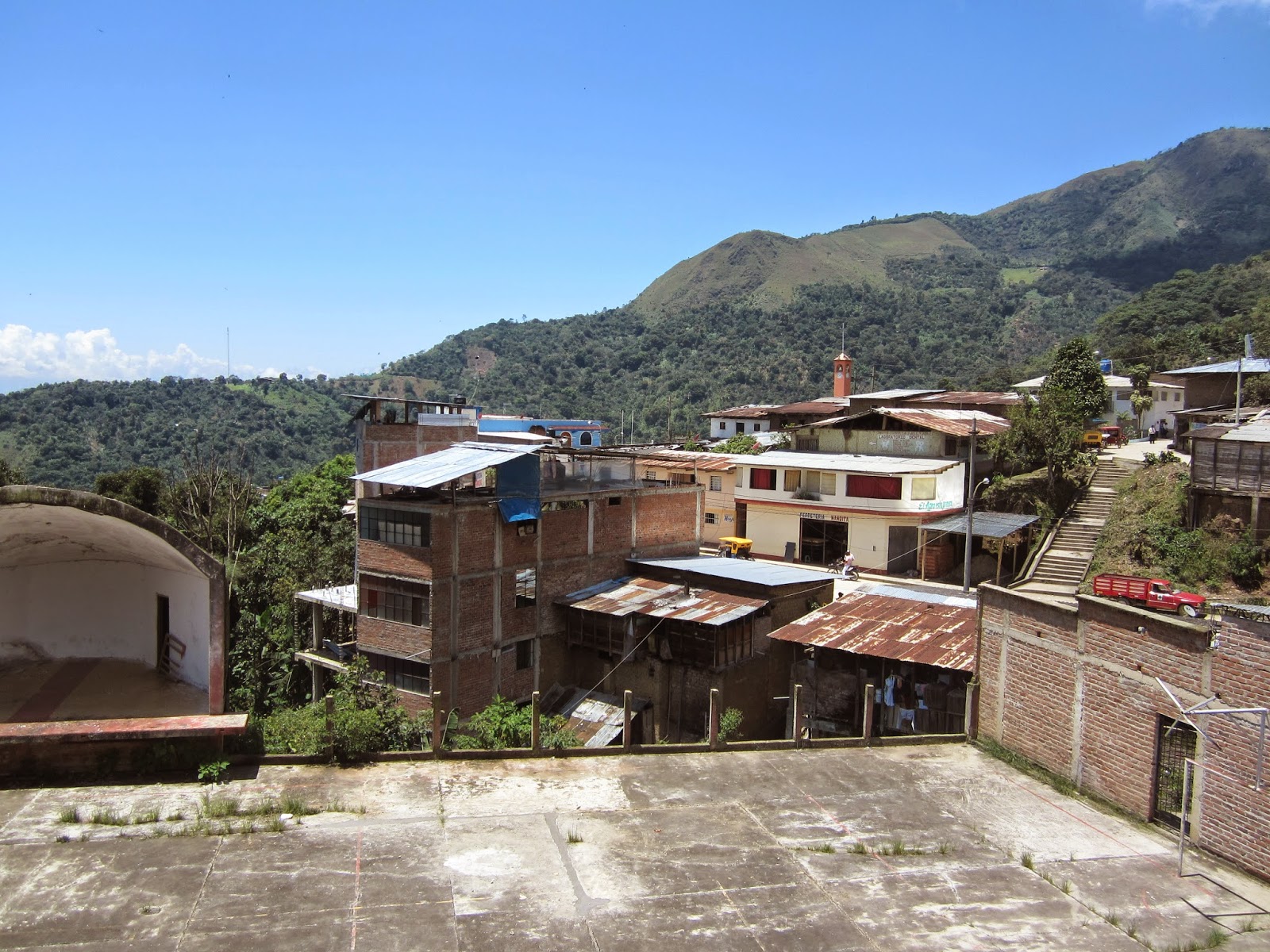
In coffee country of Peru

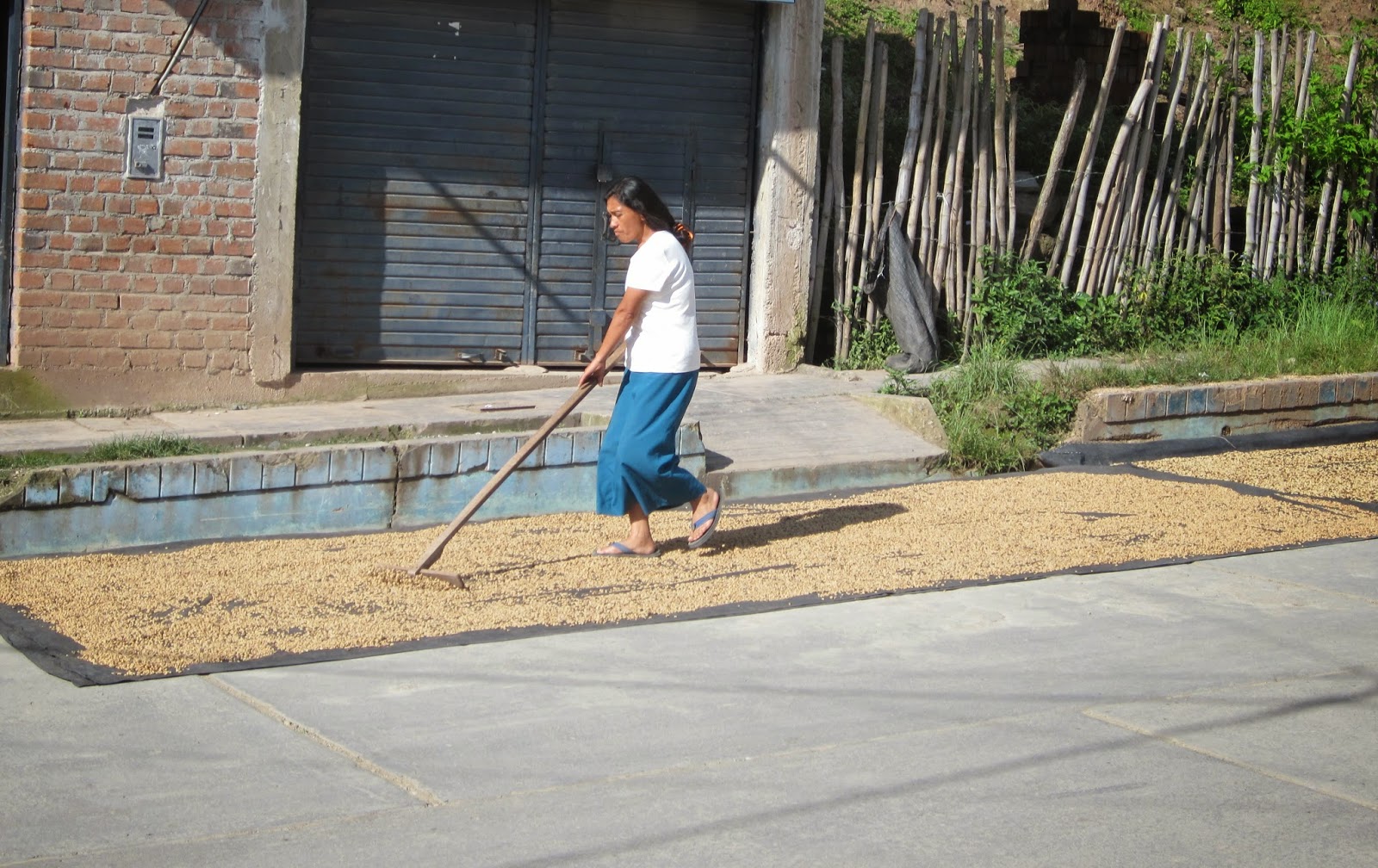
Drying coffee in the streets in Peru

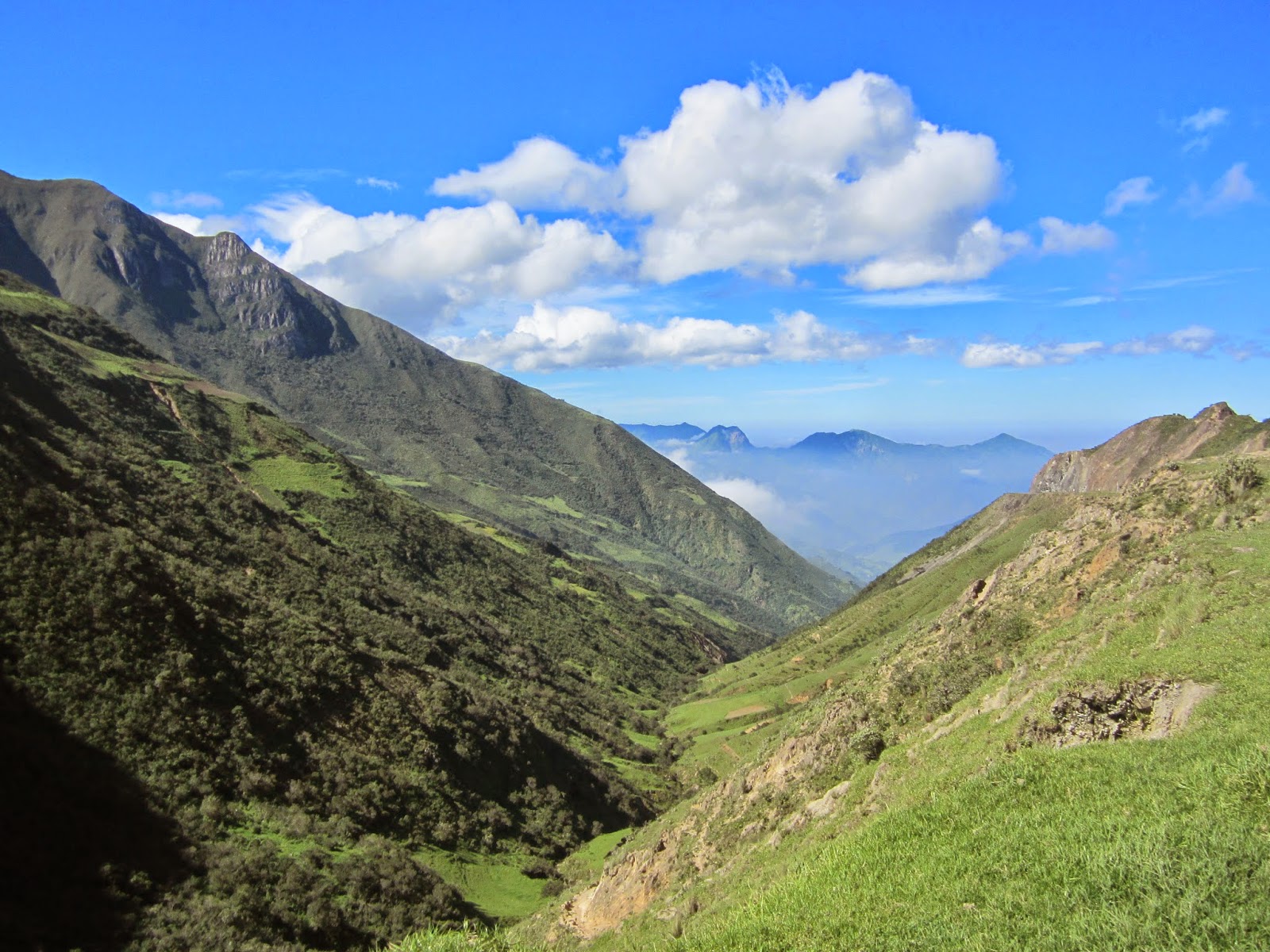
Somewhere between Jaen and Chiclayo at 2,137m (7,011ft) in Northern Peru.
In Peru, I reached La Coipa, a town tucked in the coffee producing areas of northern Peru.  Interesting facts: coffee is not customarily consumed here and coffee is dried on the streets.  This was my first time back in Peru since I lived there in 2006 and my first time to the Cajamarca region. In Nicaragua, I learned that local non-export quality coffee is served practically 24 hours a day, at least it felt that way.  
Community Health Promoters at the closing ceremony.
 This was my return to Nicaragua for the first time since 2005. It was interesting to return to the country that I first visited outside of the US and Canada and one that had a special place in my heart. I found that Nicaragua was very different than what I remembered with society feeling more closed under Ortega’s presidency. The coffee producing areas were new to me and I made it through every inch of la ruta del cafe. I really love that the fair-trade coffee cooperatives care so much about their farmers and meeting an inspirational woman that runs one. I saw the strength that the empowered community health promoters to educating their communities on cervical cancer. 
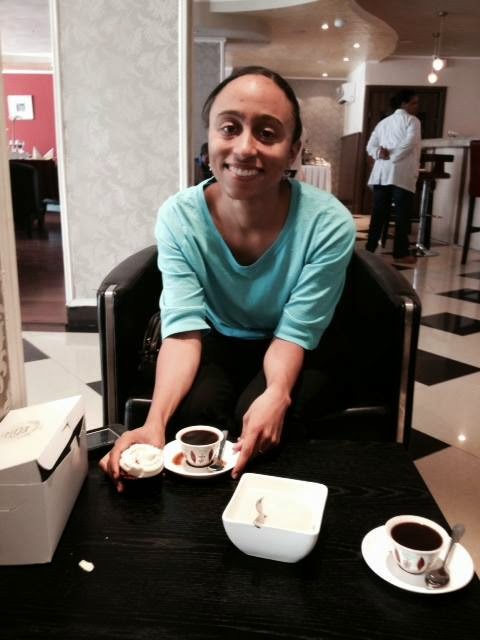
Coffee and cupcake celebration

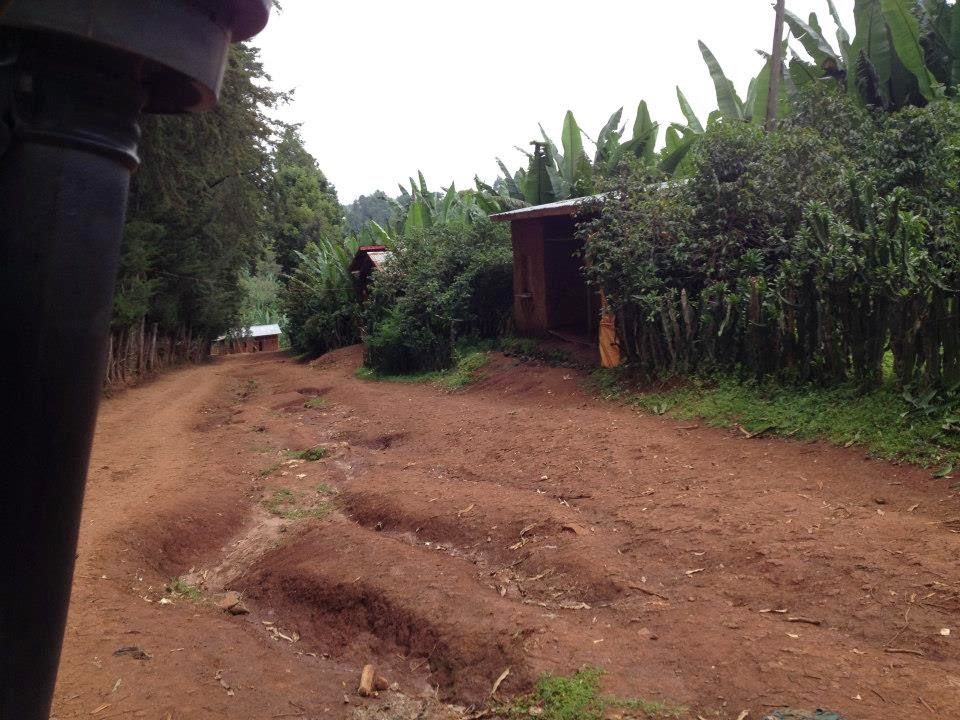
The road more traveled in SNNPR

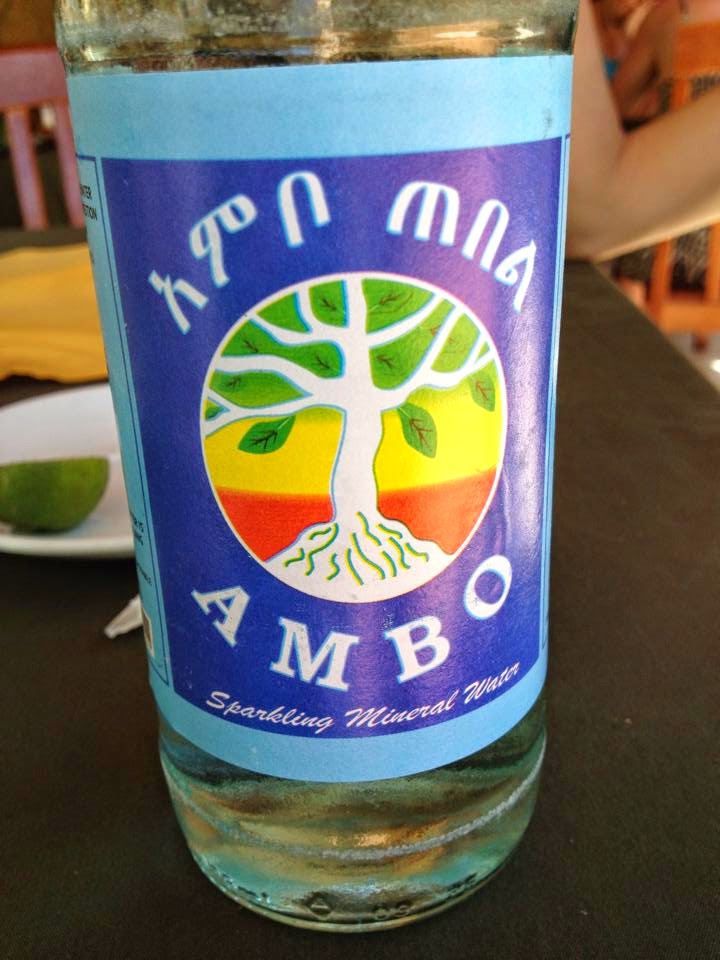
Water with healing properties!
In Ethiopia I saw and felt so much. Being in Africa again and in a new place unlike any other I had ever lived in. A proud culture and the birthplace of coffee. My first coffee ceremony. Meeting a fair-trade coffee buyer and listening to the importance of fair-trade for farmers. I also saw the aid culture present and alive in Ethiopia and how that presence fails to reach rural areas. I tried tej, dorowat, and learned to love ambo (sparkling water) as the only relief from feeling ill. In Kenya, I took a breather from the last three months, spent valuable time with my partner, and then started to take the pieces apart from the life my partner and I had started in East Africa. I found Kenya still brimming with complexities and fear over the issues with Somalia and a vigilant society to what are considered “others.”  
As I made my way back to Vermont I began to reflect and think about the importance and opportunity I have with my work to be apart of making change that's bigger than me. I also thought about the next chapter of my life, as I prepare to make a life-long commitment to a loving/caring partner and how to learn from my past mistakes and success. The next four  months is going to be similar than the last but I know I will come out better for it afterwards I just hope I can hang along for the ride and keep up!
-a-

Wednesday, January 8, 2014

Managing Change: 2014 and Beyond


Happy New Year! A week into 2014 and add polar vortex into the mix, this year is certainly off to an interesting start. Meanwhile I have been in the picturesque Nairobi climate the last few weeks. As I ended my 2013 I was surrounded by a peace I can’t really explain. After months of being burned out I felt the most relaxed in literally a few years somehow the dark circles under my eyes are even disappearing.  I came to a few realizations as always but the most important was that life didn’t have to be the way I was living it. Sure 2013 brought many good things to me but it also made me realize that I need to take better care of myself. In doing so I had to make some difficult decisions about my career and personal life. I tend to internalize my stress and it presents itself by insomnia, poor eating habits, and negative mindset. I was an unhealthy person last year and while I am not a resolutions person per say (more goal-oriented), I am facing transition in 2014.

Change is hard. A friend posted a study saying that it takes 66 days to effectively form a new habit. Personally, I like the fact that the New Year is a clean slate and an opportunity. As I work in development I follow a number of related blogs. One of my favorite posts on Development Crossroads is a 3 part series entitled, “3 Keys to Navigating Change and Landing on Your Feet.” The post is not dated but I find myself going back to it time and time again. For me the 3 keys are like stages but they may not manifest the same for everyone. The following is the condensed version.

Stage 1: Letting Go
This is positively the hardest stage because it entails releasing the past in order to begin anew. Most believe that one should have no regrets. I often regret the ending of situations but this stage focuses on closure. Yesterday is gone and today is a new day. I have been listening to the audiobook for the Power of Now by Eckhart Tolle and the practice of being in the present is very effective if maintained. Endings often are associated with a loss of some sort. The advice in the article is to try and ‘end’ well when starting the transition period.

Stage 2: Letting Be, aka the Neutral Zone
I call this the buffer zone and it is currently where I feel I am. This stage marks the time in between endings and new beginnings. At times I feel this is the most relaxing stage as there is ample time for self-rejuvenation. If the next phase has not presented itself some get very stressed. As I get older this stage is akin to hitting the reset button. So far I have rested, been reading, eaten well (maybe too well) and tried to be as relaxed as possible without worrying about tomorrow. Acknowledging that I can’t go back in time affected me when I entered this stage. I said to myself, you did what you could and now its time to just be here now.  As typical with me I wanted to skip this stage and just move ahead but this is the core stage of transition- personal growth and ridding the old shell much like a snake sheds its skin. The article provides ten tips to make it through this stage.

  • Shift your attitude by recognizing that this is a time of reorienting and redefining yourself.
  • Readjust expectations and accept that this will be a less productive time.
  • Limit additional changes in your life/work/environment. (HARD ONE!)
  • Expect uncomfortable emotions: fear, confusion, even despair.
  • Take time to be alone on a regular basis for reflection.
  • Get creative: question, experiment, brainstorm, and try things out.
  • Set short-term achievable goals to establish a sense of accomplishment and forward movement.
  • Tracking Progress (journaling, going on retreat, and checking in with a friend/coach regularly)
  • Resist the urge to skip this stage.
  • Survive it: you will live through this and come out on the other side.

Stage 3: Begin Anew
The blog author quoted William Bridges saying, “beginnings take place when people are ready to make the emotional commitment to do things the new way and see themselves as new people.” I couldn’t agree more with this. This process doesn’t have a timetable. As typical in this stage and a symptom I am already feeling, nervousness takes hold. Beginning anew is scary requiring a new commitment while the reminders of the ending are there still. The ‘ending’ or past is very final by this stage and the issue of taking a risk with the new journey/identity is even more daunting.

2014 means for me landing on my feet even though my knees may be shaky still. I make 3 goals a month and 3 major ones in a year. This month I aim to stand tall and learn as much as I can about my new endeavor.
-a-

Saturday, December 28, 2013

Version 28.0


My favorite quotation: "While the astronauts, heroes forever, spent mere hours on the moon, I have remained in this world for nearly thirty years. I know that my achievement is quite ordinary. I am not the only man to seek his fortune far from home, and certainly I am not the first. Still, there are times I am bewildered by each meal have eaten, each person I have known, each room in which I have slept. As ordinary as it all appears, there are times when it is beyond my imagination." ~from the Interpreter of Maladies by Jhumpa Lahiri

In a few hours I will be 28. Most people don’t celebrate 28 as it 
is not the big 3-0 but I think it is important to celebrate every year of life. Someone told me that 28 is the perfect age as you are not too old or too young.  According to the Telegraph, women are most happy at 28. I wrote before on the lessons of the 20s that I have learned so far. I will reflect on something I am noticing. This past year so much went on in my life and 27 has been an amazing ride. I have noticed changes in my personality that I consider improvements and I credit them to my growth over this year. I am not afraid of aging. In fact, I feel more confident as the numbers increase. I noticed that I have let go of some of my neuroses and I am much more comfortable and confident in myself. Never having been much of the type of person to put things off until the ideal moment, I really jumped head first into things this past year (job, moving, etc.) and I am continuing to do that into my 28th. Let’s go into it shall we?

General maturity seems to be a normal aspect of 28. In society’s eyes at 28, you're still in the acceptable zone of single (even though I am not single), but time is of the essence. Most of my good friends are in relationships or married and with kids. I think that when you start hitting the late 20s, for some the idea of having kids is not as gross as it used to appear (speaking for myself at least). I have also grown a new found respect for family members as I imagined them at my age and knowing we would have been friends. Thinking of how they were at 28 gives me a new take on what it is like for me. Most 28 year-olds are done with college and have most likely had a job or two or three in the workforce. It has taken me a while to get into the career grove even though I have been working since I was an early teenager. I am now building and actually have career goals and a somewhat tangible path towards them. In 2014 I will start by simply finding a mentor.  I learned I am a sensitive person with a lot of grit and I don’t really like to show my sensitive side. I love a good challenge and this year I challenge myself to even more personal growth.

When we are born we immediately learn 2 things: to cry and to smile. I do a lot of both but mostly laughing, as it is infectious. At 28, my Quarter Life Crisis, happened at and ended by mid-26. I made decisions a long time ago about the kind of person I wanted to be and how I would live my life. So I am continuing to hold nothing back. I know this year is going to be Ariel Version 28.0.  

-a-
For Articles on 28 from others click here and here

Sunday, December 15, 2013

A Millennial Nesters Reflection


In my free time I love to read blogs of various topics: life, career, beauty/fashion, running, crafts, writing, etc. I suffer from being one of those people that have too many interests, what I label as ‘being all over the place’. I find some of these blogs offer a lot of reflection which I really enjoy being a millennial. The world is so super connected and there is a lot going on and reflection is the last thing my generation gets to unless its in a list format. This is the reason twitter; FB and buzzfeed are so popular with my cohort. 

 
"Millennial Generation" Source
In the last week I found two articles that somewhat contradict and I would like to reflect on them. One from the WBUR website, points out why millennials are not leaving the nest and how to 'nudge' them out. This assertion was based on recent studies. The other was on Idealist Careers and asserts that parents whatever their respective generation is, affects their children's generation  [insert millennials here] view of their careers. WBUR quotes the term  “emerging adulthood” coined by a Dr. Jeff Arnett referring to the period of life between adolescence and full-fledged adulthood. Dr. Arnett says this is the ‘exploration’ period where, between the late teens and late 20s, people explore their options before committing seriously to a career, home, or family. This article says that millennials are making these commitments much later in life than generations past.

Thankfully they did mention some reasons including:
  • Shift in the economy that necessitates more education
  • Rising marriage age
  • Increased sense of personal freedom over the past several decades
  • Job market

Poor millennials, we just can’t catch a break. Later on in the article parents are mentioned and how they really try boost the confidence of their children to live independently. Personally, this is pathetic to me. Most millennials, thankfully so, have changed the ‘American’ new ideal of kicking children out on the curb ay 18, perhaps not intentionally but for the reasons above. Many households in the US, particularly minority ones, have inter-generational households and not only it this good for the family but it is good for the economy. Imagine all those independent millennials during the crash and recession of ’08 and where they ended up. There is nothing wrong with living at home. I want to be apart of my family; this does not mean that I am not independent but that I want to be involved and yes the benefits are even better. Money saved and bills paid on time. I have friends that only see their rents a few times a month or a year. That’s unacceptable to me.  

Now Idealist Careers post (also based on a study) is saying that parents influence the working mentality and career choice of their children. While I don’t deny some of my career is influenced that way I disagree with the vast majority of this theory. It is like saying that if my parents were democrats, I will be a democrat.  This article contradicts the WBUR one simply because if that were so we would have less liberal arts folks in the work place these days and more of the technical workers the government keeps harping on. It is also ignoring the pink elephant in the room: past generations had an easier “emerging adulthood” than the millennials. This cannot be denied just look at the cost of education and inflation for starters.

The questions we should be asking and answering is not if parents influence their children’s careers or even if millennials are still nesting but rather how can we help millennials meet their professional objectives in a globalized world? It goes beyond these scientific and technical jobs being proposed and more to do with the various aspects of adulthood.  Millennials don’t fit the mold of past “emerging adults” and their generations, so why are we still trying to compare while kicking us out at the same time?

-a-

Saturday, November 23, 2013

About that 10-year High School Reunion...


In less than a week my 10-year high school reunion will take place. Of course the first thought was, “has it really been 10 years?” According to a recent Buzzfeed article I will be entering the best year of my 20’s next month, 28.  Several people have told me this is the best age as you are no longer considered young but also not considered old. Alas, societal fixation on age and its nostalgia. Instead of focusing on the obvious 10 years after high school, I did valuable research by watching the film, Romy and Michele's High School Reunion.

Spoiler Alert: The premise is two-tortured bff’s from high school turned party girls, receive word of their 10-year reunion. They quickly realize that their lives aren't as impressive as they'd like them to be since their days of being picked on by the popular crowd in high school. Instead of staying home they go to the reunion with business outfits, cell phones, and a huge fake success story. It’s a very funny flick. 

Circa 2002-3 Junior year of High School
Overall the film gave me insights on how I feel about my reunion. I will not be able to attend due to being outside of the country for work, but I have been thinking about who I am now compared to my 10 year ago self. It is no secret that I was never fond of high school and that I went to 4 different high schools in various states. I started as a timid 13 year-old and much of my time in high school was similar to Romy and Michele’s.  I can’t bear to actually tell the stories here of how I was picked on. I was quite sullen during most of those four years. I remember half way through my grandmother passed away and the profound affect it had on me. I was depressed for months and suffered from insomnia. I never fit in at any school I was at and I never really wanted to. I remember looking back that all I was thinking is, “I need to get out of here” even though I had no idea where in the heck I was going. I do not look back on my time in high school with fondness, but rather as ‘my lost years.’

Without realizing it I have sort of reinvented myself since my reunion and done things and visited places I never thought I would. If I were going to my reunion there would be no need to embellish on my post-high school life like the film. I am content with my progression. Also, I don’t feel the need to compare my life with my former classmates, popular or not, or get back at people for how they were in high school. This natural curiosity and comparison of others is typical, especially when thinking of high school. Funny thing is I am not the least bit curious as majority of my classmates probably do not even remember me or know I went to school with them.

I am more focused on the future than the past me, especially the high school me. When people refer to their high school years as the best in their lives, I can relate via my undergraduate years of college, which I consider the best of my life in terms of self-realization and growth. So while I am not interested in going to my reunion this time around and catching up with my former classmates who probably do not even remember me, I wish all those who are attending find what/who they are looking for and remember to be themselves. Everyone I am sure has changed drastically since his or her high school days, and I can only hope that it has been for the better.

-a-  

Saturday, November 9, 2013

Café au lait


The following is a story I submitted to the Minority Peace Corps Association for their collection of stories written about RPCVs of color.
Center Stage Taking The Peace Corps Oath
The reality of being a PCV of color had not hit me until well after the swear in ceremony. Even though I had been only one in a handful of hopeful PCVs of color in my 60 plus stage, I was distracted on making such a change in my life. I joined PC for the same idealistic reasons many others do, I wanted to make a difference. After my research on Morocco I figured that being of mixed ancestry would be easy considering the Arab and Berber mix of the country. I was inspired by RPCVs growing up, I remember my family and I opening the invitation package together after I had trekked out to the mailbox to get it on a cold Vermont winter night, and the happiness I felt. My family has had Peace Corps in its DNA (4 served to date).  Growing up I was brought with my brother to RPCV events in my home state of Vermont for years and I came to love RPCVs. They were very different compared to other Americans, either it was their dress, speech, eating habits, etc. I had great experiences living and working in Latin America and thought PC was naturally the next step. I was used to being different growing up in a mostly white state and family. I wasn’t even fazed anymore at noticing being the only person of color in a room. I was reminded from time to time of my otherness from people staring at me, getting pulled over for no reason multiple times (I’ve never had a ticket before), or people being so bold as to ask, “what are you?”  So the Peace Corps did not present a completely brand new paradigm for me. It was a novelty hearing my mostly white stage talking about the reverse for them, and now being the “minority” after just a few days in country. I never understood that being white was difficult. I even tried to ignore the comments some made saying it must be easier for me since I looked “Moroccan,” which in my opinion is a broad statement to make since Moroccans vary in looks drastically.
 
My host siblings Amina and Brahim during 1st year in site.
I remember my first week in site and the first look on people’s faces when they saw the new supposed PCV and the disappointment in their faces. I quickly learned that the residents in the small Berber town in southern Morocco were clearly not expecting a brown person. They did not have one before me either so there was no buffer. Many flat out told me I was not American, especially when I explained my family’s heritage. I was not hurt by the fact that people did not recognize my birthplace but by the fact that I had to explain myself to them, which was no different than being in America. Fact is to most Moroccans and with the whitewashed standard of beauty promoted in the country, I was not exciting/acceptable and it was a hard pill to swallow. White PCVs seemed not to have that issue as they gained celebrity status immediately. Then again I was used to this when having to explain my unique linage, in the U.S. or otherwise. This is what it is like to be in between. 

Dressed as a Berber Bride
I often had experiences where I was not given the same attention as white PCVs while in town. Apart of me was happy with this but on the other hand a small piece of me took this to heart and felt like something was wrong with me or I was not enough. If a white PCV friend was hit on or engaged in conversation and I was not, I felt snubbed. I would not call this jealousy but for a person who has had to come to terms with being different their whole life it is difficult to not internalize situations like this. 

Teaching my weekly health class.


Reality is there are so few global women that look like me that are considered “beautiful” in the public eye. Also I would say that during my first year of service it affected my confidence and self esteem a little. It seemed the only time someone was interested in what I had to say was if I was explaining my background or trying to speak in the local dialect - Shilha. I drove to improve my Shilha in the hopes of meeting common ground with people and make up for not getting the blond hair blue eyed genes from my family.

In village, people eventually got used to me and I believe some came to terms with me being different. I also think my experiences as a person of color in the U.S. and Morocco really helped me understand my identity more.
Finished World Map Project at the local school.
Ultimately the experience of relating those in my village and helping them to realize their own goals, like improving their health, helped me to realize that development was my calling and I had a knack for being able to relate to people quickly. I didn’t have the experience that my relatives had, as I was a ‘modern PCV’ and one of color, but like all Peace Corps volunteers I was changed for the better by my close of service time. 

i:  Café au lait was the name a cab driver gave me while I was passing through the cite of Marrakesh. It means coffee with milk. 

To read more on my experience check out my Peace Corps Blog.   
Saturday, October 12, 2013

Brief Self Care Guide for Fieldworkers


I will be the first to tell anyone interested in development, particularly fieldwork, that it is not easy. While there are many reasons for this, one is the toll it takes on your body and mind. Many development newbies from the west think they can hack being in the field for extended periods of time without familiar comforts. I have  been in development for almost 5 years and I can tell you it is not easy on my body/mind. Most recently it has been difficult adjusting to a hardship post. I have almost been working in Somalia a year and I am just getting used to things like having armed guards accompany me on field visits/meetings or random gunshots. Mentally, it is really tough to be away from my support network. I do receive R&R (rest and recuperation) every 8 weeks, which does help. The point is: a fieldworker has to be creative when thinking of self-care and make it a priority. The first step is to say no to working on your days off. Vegging out, defined as the art of doing nothing, is very important to me in the field and since my compound has both our office and guesthouse, it is tempting for my boss to ask me to work on designated weekends. It does happen occasionally that I do have to work but I insist that fieldworkers do not make this a regular habit. 

The Mind/Body Connection
For me I realize that stress and poor sleep are related. Before I moved to Somalia and for many years, I have been an avid runner with one marathon under my belt. I have not been on a run since July 2012, so how do I ensure my body gets proper exercise in the field. I have a schedule. Firstly, I practice yoga 1-2 times a week. Investing in a quality yoga mat is a must. Secondly, I do actual at-home workouts. I mostly use Jillian Michaels DVD workouts 3 times a week because they are 20-30 minutes and I actually feel like I have worked out afterwards.  Remember to stay hydrated if posted in a hot climate. To save space I transferred my DVDs to my hard drive. One may ask how to workout without fancy gear, but I say again that you have to be creative. For example, I made my own weights and while they may not be much, they do the job. Also, I often meditate and pray. These practices clear my mind, improve my mood, and help me remain focused. Without them I feel lethargic and apathetic. 

Use the Web
Another relief for me is Skype as it gives me a way to directly communicate with those I love. Make regular Skype dates with loved ones! The one thing I tell newbies is to keep busy. On weekends in a compound in Somalia, I do a number of things like writing blog posts and it is cathartic. Another is following career blogs, namely ones in my field like Whydev or Aid Leap Completing online trainings, like the new Sphere standards e-course, is a great way to boost your resume for free while keeping up to date with industry standards. On occasion a good webinar is very useful as well. Most recently I submitted a practice note to an academic journal, Development in Practice, another great resume booster and anyone can submit. For fun I am hoping to complete an online homeopathy training


Entertainment
This is so underrated in the field. Games, electronic or otherwise are also good. When I first got to Somalia I had a hard time sleeping. Games help me to zone out, resting my brain and allowing me to fall asleep quickly. Also I find that free time is good to watch shows/movies. I have a weekly schedule of entertainment, weather its shows or music/games and it really gives me something to look forward to each day. Invest in a good external harddrive. Most recently I was allowed to use the office projector to watch a show or movie and it really felt like having an at-home theater. Also, I recommend reading. The subject doesn’t matter or the platform (online articles, Kindle, or hard copy), just read!

Your Choice
Ultimately, how you spend your time in the field is up to you. I am one of those people who is always busy and cannot sit still. I have never understood the concept of boredom. The tips I have given are just a few but the point is fieldworkers must prioritize self-care if we are to be effective. There are plenty of resources out there. Try some and I guarantee they will make your life all around better.

-a-

P.S.: Why Dev is taking about self care all week. Check out these links here and here.