Friday, September 7, 2012

Otredad en el sur Global? (mi primer post en español)

 “El hombre no tiene ningún derecho especial porque pertenezca a una raza o a otra: dígase hombre, y ya se dicen todos los derechos. El negro, por negro, no es inferior ni superior a ningún otro hombre.” ~José Martí

En primer lugar quiero decir que mis sentidos están sobrecargados. Esto es normal cuando se muda a un nuevo lugar. Mis ojos, oídos y boca están todos vivos con las vistas, olores y aromas del África oriental, y todo lo que me está ofreciendo. No es mi primera vez en Kenia pero este ajuste va bien. Se tomó un buen tiempo para ajustar a el tiempo y mi patrón de sueño está mejorando, gracias a Dios. Todavía estoy tratando de envolver mi cabeza en torno al hecho de que mis seres queridos se están preparando para dormir cuando me estoy preparando para mi día del trabajo. Cuando no estoy completamente absorto en documentos de planificación de proyectos y materiales de investigación para el papel de la maestría, me encanta el arte de observar a la gente, que me presentó una buena amiga hace años. Vivir en Nairobi es increíble. Culturalmente, este país tiene bastante que ofrecer, ya que hay muchos grupos étnicos y también se ve influenciada por los países vecinos y los continentes de Europa y Asia. Como un ávido foodie, estoy en el cielo. Curry, panes, pastas, especias, mariscos, etc. Como amante de las artesanías, puede terminar sin dinero. La bailarina se mueve dentro de mí junto el ritmo africano de mis antepasados.

Tras varias salidas, sobre todo para tareas del día a día, una cosa ha llegado tan sorprendente para mí. En Nairobi, cuando miro a mí alrededor veo tantas personas que se parecen a mí. Tienen el mismo color de piel, la textura del cabello, y otra calidad similar y sorprendente es que sus padres dos colores diferentes. Sí, esto es sólo una reacción visual de la gente. Siendo una persona de raza mixta, eran pocos y dispersos tiempos que vi a alguien con una composición similar a la familia mía. Eso es lo que es tan sorprendente, que hoy es prevalente en África, Europa, Australia y América. Veo muchas parejas mixtas de diferentes composiciones, produciendo hijos únicos. Esto es muy refrescante para mí.

Como un niño e adolescente, tuve problemas con mi identidad. Esto se documenta en un proyecto que estoy trabajando con la intención de crear un libro. No sólo la idea de la identidad me la peste, pero al ser un producto de una familia rota y pasar la mayor parte de mi infancia criada por mis abuelos (s) que también me afectó. Me siento mucho más cómoda con mi misma y mi identidad multicultural como adulta. Yo me veo como una persona de color, pero ese color no está definido por las clasificaciones de la sociedad. Se define como el color con que nació dada la combinación de mi padres. Como Shakira (también mezclada) dijo, "América Latina está unida a África por el cordón umbilical". Esto es cierto en mi caso con mis raíces caribeñas. Todavía están aquellos que cuestionan mi identificación y no se les puedo culpar, especialmente dando cuenta que el presidente de EE.UU. se considera a sí mismo el primero presidente de color de los EE.UU. ¿Por qué no puedo elegir ya? Muchos optan por este camino, ya que es lo menos complicado. Me pregunto a mí misma, cómo estos niños se ven a sí mismos. Me pregunto cómo los adultos jóvenes / adultos se ven sus identidades, si es similar a mí o han decidido elegir a un lado?

Las sociedades han evolucionado a partir de la regla de una gota, el estereotipo del mulato trágico, y El Sistema De Las Castas. ¿Cómo estas familias mixtas se produjeron en el sur global? Es un nuevo tema de interés que ha surgido. Alguien me comentó que estos números crecientes de niños son subproductos posibles del turismo, la industria del sexo, o expatriados que se casan con los lugareños. El hecho de que se conciben hay que reconocer en todo el mundo, ya que tuvo este acto de comprensión para mí, y me imagino que los demás, para darse cuenta de todas las personas que se parecen a mí y por lo tanto tienen múltiples capas del inbetweeness. El reconocimiento y la aceptación son dos cosas muy diferentes. La aceptación es un largo camino por recorrer, pero el primer paso es el reconocimiento. Lo siguiente es que nosotros (la sociedad y los profesionales del desarrollo por igual) necesitamos hablar de esto más. Aunque me gustaría ver a la industria del sexo completamente desmantelado y declarada ilegal por muchos motivos, si los niños son un producto de estas uniones, deben ser apoyados. Desde mi experiencia, sé que no es fácil vivir en el medio, y el apoyo es lo que necesitamos. Al igual que muchos países reconocen que tienen poblaciones diversas, necesitan hablar a nosotros en el medio. De este modo, podemos tener un lugar en la sociedad que acepta nuestras experiencias y nos hace sentir cómodos en lugar de ajustarnos a las estructuras de clasificación existentes (déjame decir que son obsoletas). No puedo evitar sentir feliz / aceptada cuando veo una opción para mí en un cuestionario racial. El hecho de optar no llenar estos cuestionarios es para otro post. Sé que muchos no están de acuerdo conmigo y entiendo estas opiniones muy bien. Este es un debate que ha estado en curso desde hace siglos. No va a ser resuelto por este post, pero si la gente está hablando habré superado mis expectativas.
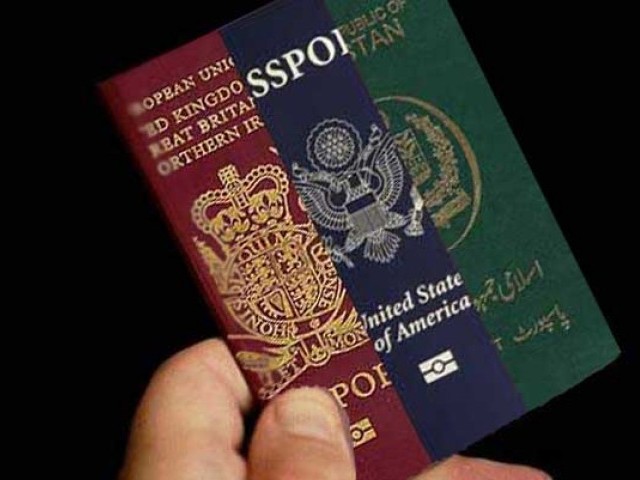
Tener múltiples identidades no es únicamente en términos raciales, sino también a los que tienen doble nacionalidad. En un mundo globalizado es una realidad. Tengo muchos amigos de la doble nacionalidad, tanto reconocidos y no reconocidos formalmente en la forma de múltiples pasaportes. Una vez más, tenemos que hablar de esto. El ejemplo de este artículo de Afua Hirsch, tanto británica como africana (Ghana), que  me ayudó a entender ambos ejemplos de blendedness que ofrezco en este post. Yo, como Afua, negó una parte de mí mismo a veces durante mi infancia. Fue difícil comprender el color de la piel, textura de pelo, la religión, la raza, la cultura, las costumbres y ser aparte de una familia blended. ¿Cómo pude haber explicado esto como niña, cuando ni siquiera lo entiende yo? Cuando estoy en el extranjero, y muchas veces cuando estoy en los united, la gente siempre pregunta de dónde soy. La respuesta, "los united" o "aquí", no suele ser suficiente y estoy interrogada con preguntas como: "¿de dónde eres realmente? y tus padres? Tu sabes que todos los norteamericanos son de otros lugares". La gente entonces me clasifica o me llaman nombres (que es una forma del acoso).

Imagínese teniendo múltiples pasaportes y culturas. Algunos se refieren a este término como "TCK", más conocido como los niños de tercera cultura. David Polluck define un TCK como "una persona que ha dedicado gran parte de sus años de desarrollo fuera de la cultura de los padres. El TCK frecuentemente construye relaciones a todas las culturas, sin tener la plena propiedad de ninguna. Aunque los elementos de cada cultura pueden asimilarse a la experiencia de vida de la TCK, el sentido de pertenencia es la relación a otros antecedentes similares. " Otro ejemplo de esto se documenta en el artículo Mo Yaxye " Volver a casa a Mogadiscio. " Este artículo me parece tan convincente. Mo, acaba de regresar a su país de nacimiento (Somalia), se sintió aislado. "Somalia, Somalia o Waryaa (como mis hermanos / hermanas de Kenia diría) ha sido la identidad que he estado realizando desde hace más de 30 años - una identidad que he llegado a aceptar, pero nunca entendió. Nací en Mogadiscio, pero a la izquierda en torno a 4 años para no volver hasta que una mañana de sol el 26 de julio de 2012. Crecer en Kenya y más tarde en el Reino Unido, me recordaba constantemente mi otredad”.

La Otredad y blendedness por lo tanto viene en muchas formas. Este fenómeno es grande, pero una cosa segura es que: habrá mucha más gente como Afua Hirsch, Yaxye Mo, y yo. No soy fan de Mel B, pero algo de dijo sonaba a verdad para mí: "Como mezclada, soy la prueba viviente que la sociedad ha cambiado, que las barreras se han roto y las personas se están uniendo mucho más, por lo tanto debemos estar de pie orgullosamente y diciendo: " ¡Sí, Soy multicultural!” Yo digo que deberíamos decir: "¡Sí, estoy orgullosa de mi otredad!" La mayoría de las familias se componen de muchas composiciones y mezclas. Todos tenemos un sentimiento de otredad que no sólo se define por la raza o la nacionalidad. La realidad de abrazarla sigue siendo un sueño difícil de alcanzar.


Clara Como El Agua es otro ejemplo interesante de la otredad.

Clara Como el agua es una película de diez minutos de ficción sobre los cuentos y las medias verdades que rodean los orígenes de Clara, una niña, negro de piel con cabello rubio rizado, y ojos grises, que se burlaban sus compañeros, hasta que se aventura en las aguas mágicas de la bahía bioluminiscente de cambiar su color de piel y posiblemente ella misma.


Para obtener más contexto sobre el tema en el contexto de América Latina, véase:

Tuesday, August 14, 2012

Re Post: International Somali Youth Conference?


This post was written on September 10, 2011,on my brother's website (check it out), http://thesocialcartographer.org/. I felt compelled to post this as I interact in a dynamic context with many youth, some of which are Somali, and it brings a general sentiment to mind when discussing the topic at hand, advocacy. Many youth are simply not involved in any social change movements. It is not enough to simply use media outlets once in a while to passively comment on what is going on. The revolution in Egypt invigorated the the youth via social media, but this in my opinion, wasn't the driver. A prominent question in this post is, "Where are the people to create this future?" This reference, in part, is directed at the youth, particularly the Somali diaspora.  Youth from generations past showed how dynamic political change is and demanded to be heard. This is simply lacking from today's youth. Enjoy the post. -a-

What Do We Have?
I have been think lately that a major cause to the continuation of the Somali conflict is due to the inactivity of the Somali civil population. There may be several organizations inside Somalia trying to change things but what about the millions of Somali Diaspora. Where is the strong framework for social change there? I do not see any. In fact the only advocates I see in this conflict are the Islamist, the TFG, and the Clans. Where are the people that wish to create a great Somalia for everyone? Where is the social movement that believes in a people's nation? Where are the people willing to fight for Somalia, not for themselves? Wither your an Islamist or TFG member, a great Somalia will not be born from the ashes of conflict. A great Somalia will only be born from the fire of dreams, the audacity of hope, and the will to imagine a greater future.

Where are the people to create this future? I do not see them. Where are the qualified strong leaders that can build this nation? I do not seem them. What I see is a group of misguided youth thinking they are part of a great struggle when they are only creating a greater struggle for others. I see young men and women who leave the dry and hopeless nation of Somalia to find a place where they can thrive to follow their dreams. What I see are mindless and morally corrupted organizations that feeds on the ills of others all in the belief that the ends justify the means and calls it a religion or politics. I see people who starve because they have no power. I see people who have power who are not worthy of such power. I see inequality. I see mayhem. I see fear. I see hate.

I truly believe that the children lead by the examples shown to them by their parents. But what have the last generation taught us? They have taught us how to hate our countrymen. They have taught us how not to build a nation. They have taught us how not to fight for the things we believe in. They have taught us how to fail. They have taught us why we should not to listen to them. But most of all they have taught us how to become grown men and women. This is most important because although we learn by example each and every one of us has the ability to choose our own way. I have learned what path not to follow. I've learned from others mistakes. But for the past two decades we as a nation have continually been making the same mistakes over and over and over. We are trying to build a nation from the top down. If you understand the basics of trickle down economics then you will understand that trickle down governance is just as slow and unreliable.

I believe the time has come for the next generation to solve the Somali Crisis. I believe that we can come up with a solution that has not been discussed yet because we will do this for Somalia not for ourselves. So is it time for an International Somali Youth Conference?

The Movement
I've always been surprised by the extent, popularity, and network capabilities of other sociopolitical movements. Looking at movements like Free Palestine, Free Tibet, & Save Darfur, I've always wondered how they became so popular. By popular I mean well known with considerable network of supporters. Well, "The Free Palestine Movement" I believe is popular simply because a lot of Arab countries were embarrassed by Israel. The other reason is that the movement is in direct conflict with Israel which is basically an extension of the West into South-West Asia. The "Free Tibet" movement is a direct reflection with the West's distrust of China. It’s probably one of the few movements that would be (secretly at least) be supported by the US government as being in the interest of America. The "Save Darfur" Movement was a media blitz. The rebels in Darfur had presented themselves as "Africans" fighting "Arabs" and where able to get the sympathy of the white man. Having your government despised by the West also helps. The important thing to understand with these movements is that the popularity often (except for maybe the Palestine one) comes at the cost of the local population losing control of their own struggle. I've always asked 'what do white kids on college campuses in the United States understand about what’s going in Darfur?". The answer is nothing. But they put on a shirt that says "Save Darfur" & now their "world citizens".

We must also no forget movements that have not gotten the popular attention. The first one being "The Kurdish Movement". Probably the largest ethnic group in the world without a homeland. They are separated like the Somalis into multiple countries; Iran, Turkey, & Syria. The other movement I would like to recognize is "The Polisario Front". These people are mostly Berber or as they like to call themselves Amazigh (Free People). It’s considered Africa's longest conflict. Morocco got kicked out of the AU over this instance that Western Sahara belongs to them. But since 1973, they have been fighting to stop being the last major territory without self-governance.

Why do I tell you these things? Well I want to make it obvious that neither people power (Kurdistan, Polisario) nor publicity (Save Darfur, Free Tibet) alone are going to get the desired results you need if you’re a marginalized community.
The Silent Revolution

My immediate desire is to unite the Somalis into one National Movement. I will show the structure of the organization I am talking above.
Without getting too into it; the political parties on the left is just an example. I am thinking the Somali Solidarity Movement (SSM) would have both political parties & NGOs. The Revolutionary Intifada Army (RIA) is the Youth wing of the National Socialist Party (NSP). I believe every political party should have a youth wing controlled by the Youth. They cannot be an Army in the sense of soldiers with guns. The RIA can be best described as a Black Panther party for Somalia.
The other groups are self-explanatory. Media especially music is very important to a movement. But we must control the media about us. We need to have our own media. The National Prosperity Collective is basically the artist & civil society. Lastly the institutions are not normal Western institutions. These are vocational institutions based on experience. Students would go to the Pan African University for Peace & Prosperity & its branch the Somali Agricultural Institute, learn about simple farming practices. In 1 to 2 years would be out in the field helping farmers change their agricultural practices while still getting a 3 or 4 university degree.
I leave you with the words of the Senegalese environmentalist Baba Dioum
    "In the end, we will conserve only what we love, we will love only what we understand and we will understand only what we are taught."

Friday, August 3, 2012

A Change of Air

                    Today always brings something new and a change of air is happening for me at just the right time. I begin my field based practicum. This practicum is an opportunity that has been very difficult to secure. The purpose of it is to complete my coursework for my masters degree. My first year was in-residence study, while the second year is focused on a selected development problem. I began my search early on in November and struggled all the way until the end of May. I probably contacted 60 organizations and had 10 interviews. It takes commitment and determination to find an organization that will dedicate themselves to helping you expand your skills and qualifications in this field. I also wanted to find a good fit for myself. The organization I identified that is working on the development issue I selected is African Development Solutions (Adeso).  http://adesoafrica.org/ 
                In particular, I was intrigued by the approach Adeso utilizes to address development issues  in East Africa. As an African based humanitarian and development organization, Adeso attempts to avoid and mitigate the environmental, social, and financial obstacles that inhibit the well being of a community. Adeso does this in a way that aspires to preserve African culture and values. Adeso believes that development must come from within and not outside African communities and that it is African communities themselves who must lead the development of Africa, and not external agencies. I will be working for Adeso as a Program Support Officer for the next year, doing professional-level work that will also enable me to learn about addressing the chosen development  topic in the field. Based on the experience, I will write a paper exploring what I learned about solving the selected development problem, using a case study approach. I will return in May 2013 to present my case study at a capstone colloquium and in theory graduate with an MA.

To anyone else in grad school right now here is some advice I found from a fellow blogger that helped me:
Be confident in your abilities.
Be patient with yourself.
Be your own best advocate.
Prioritize your own professional needs/goals.
Be kind to yourself.
Be proactive about self-care.
Be a friend/comrade to others and let them do the same for you.
Be willing to let your hair down!
Be better not bitter.
Fail forward.
Bring your A-game.
Be a light to others.

All of you that read this blog will be taking this journey with me. I look forward to it.
-a-

Thursday, July 26, 2012

Miss Represented

How many women have ever sneered after seeing an advertisement misrepresenting women by depicting them in an inappropriate manner? In fact It seems as though it’s everywhere. Rarely you see women portrayed in a good light. The recently released film Miss Representation is dedicated to exposing how poorly mainstream media outlets portray women. Although I’ve known for years that the media isn’t fair in representing women, it brought something new to the table. They show interweaving clips of all the major news outlets showing some of the most successful women saying very insulting comments about them. Embarrassingly enough, I probably wouldn’t have noticed this before but it really bothered me that these women, many of whom that have been groundbreaking in their fields, being treated so disgracefully. I’m halfway finished my masters degree and perhaps it's naive to believe that if you reach a certain level, especially as a woman, that you will be respected by the media rather than ridiculed. That is my expectation at least. Regardless of political stance some of these women have reached positions never thought attainable in the past and to degrade them by how they look is utterly disgusting. Part of this, as the film points out, is cultural. We have issues when it comes to how women look and this starts with women solely. No one wants to admit this giant pink elephant in the center of the room. We are hard on ourselves. Either too fat, too skinny, too light, too dark, too much makeup, not enough, not sexy enough, too sexy, too old and I could go on and on. We are so hard on ourselves. I always listen to women when around them and I hear these comments incessantly. It’s so upsetting, especially from older women. I am misrepresented. By the media, by pop culture, and more importantly, by other women.
Trailer to Miss Representation
Another aspect of popular culture that is really hard on women is if you are single. I’d never heard of Jezebel or any site like it but I did read the “Ten Ten Very Good Reasons You Aren’t Married Yet.” While the article is written by a woman, I think that it is this sort of debate about marriage and women not marrying seems like it spans centuries. Not getting married doesn’t make you an independent woman just like marriage doesn't make you a dependent one. The article repeats the stereotype that independent women don’t need Mr. Right or that we are making a statement not putting a ring on it. I do agree with this statement however it is important not to judge all women by these standards. Relationships are personal and should not be driven society standards. Needless to say they usually don’t conform under this microscope. Thanks Jezebel but no thanks. I don’t need your advice on marriage and why I’m not or on anything for that matter. I’m my own woman and that's something I hope all your readers understand.

The final issue that the media and pop culture treats with disrespect is motherhood. See http://www.womensmediacenter.com/feature/entry/childbirth-hollywood-style Recently I posted this status on my fb profile: “I'm ever conscious that young women and girls are critically observing older women. With so many poor examples in the media and even in the grocery store, I strive to be a positive role model. I hope one day all women will realize that they too are are being observed. Young women and girls 'learn' behavior from their peers.” I wrote this after seeing a mother with a 2-year-old toddler in the grocery store wearing a string bikini and a cover up that showed off more than it covered. Her husband seemed so proud of this. Not too far away was an 11-year-old girl and her mom. The girl was staring at the mother in the bikini and it got me thinking. What have women been doing to themselves? Where are our standards? How will we want our children to behave? Our young girls? I am an independent women but independence doesn’t mean wearing a string bikini in the grocery store. It means being strong and having dignity for myself. Being valued for what is inside and not on the outside. Believe me that will fade in time. This is what my grandmother taught me. We are taught through the media that every woman must have a baby before she's too old, loose weight fast, and be a sexy milf or cougar. No I won't explain that last line. Popular culture has done a number on us. The website Women's Media Center is a very good advocate for changing perceptions about in the media about women. This article of childbirth and hollywood focusing on what a recent film left out, women of color and pregnancy complications, is missing something. I encourage all women to see the film The Business of Being Born. It is a film made my Ricki Lake and embraces natural childbirth. Aside from that she exposes the viewer to how hollywood treats childbearing which we all know isn’t pretty. Being a mother, biologically or adopted, is an experience that asks women to answer many important questions particularly about herself, her body, her image, and her legacy. This also relates to women who decide to not have children.
One of the reasons why I decided to write this post was to prove that there are alternative voices and images of what it means to be a woman today. I refuse to let industries identify what being a woman is for me. This started when my grandmother told me the most important lesson to womanhood, love and value yourself. This is a lesson everyone needs.
-a- 

Links:


Monday, July 9, 2012

An American Brigade Invasion

I've been wanting to write a post on Africa for sometime now. After living in Africa for two years as as a Peace Corps volunteer, I learned quite a bit about the continent. Everything I thought and had seen/read about Africa was quite different than what I expected. Probably the most striking aspect I noticed was the amount of foreigners living and/or working in Africa. For the most part I encountered Europeans who started small businesses or saw large Chinese factories at port cities. I always wondered what motivated these individuals/companies (besides money/resources) to come to Africa. I also wonder what they feel their impact is on the continent. Colonialism has had a very negative impact on Africa, and the legacy still impacts social structures in all African countries. I have yet to meet someone that disagrees with this statement.

The scramble for Africa became a way for colonial powers to strategize various locations for their gain. Many like to blame the current problems on various dictators and corruption but I argue that all of the current problems are lingering effects of colonialism. Colonial states had no interest in promoting a viable Africa. Peoples selected by colonial powers were often favored. This favoritism endures until today. Familiar relation to the ruling elite determines much of the social inequality seen in Africa. Below is a unique photo retrieved from a very cool blog:http://afrographique.tumblr.com/


Given this legacy of colonialism and the amount of aid centered on Africa, it is interesting that many countries are not assessing how their interventions are affecting this continent. I recently read this Al Jazeera about the U.S. sending an army brigade to Africa. See article: http://www.aljazeera.com/news/americas/2012/05/2012516215036645965.html

This brigade will be sent around the continent. Now military intervention is another cup of tea. Given the reputation of U.S. in some areas, say the Chagos Islands, I'm a little concerned when a country sends its military to another continent, brigade or no brigade. It is claimed that these troops will be trained and sent to "participate in military exercises." These troops will be 'assisting' the forces of various countries. I also found it interesting that these troops will be sent to areas that are "perceived as threats" to the U.S. This should concern the everyone. Intervening has never gone well for the U.S. and I don't believe this is the way. All the training in the world can't help these brigades to understand ongoing conflicts in this part of the world. And furthermore, what will this lead to? As bases in other areas are closing we may very well see more popping up in the name of U.S. security. Just as colonialism has left a legacy, I wonder what impact this will have? Perhaps all the billions given to 'develop' Africa hasn't ended up in the U.S.'s favor and now they are employing a new approach. 

Africa must be strengthened from within. A this is true for all continents with legacies of colonialism. No country in the global north has the answer to the problems in the global south and nothing can make up for the years of exploitation, dehumanization and countless human rights violations.  If anything, these troops will learn this lesson.

-a-


Wednesday, June 13, 2012

Foodies (and everyyone) Bewarned!

Recently, I watched the new HBO documentary, 'The Weight of the Nation.' This film is free on youtube and is a four part series that dives into the dramatic increase of obesity and the illness that comes with it. It also goes in depth about the mostly alarming aspect of this phenomenon, that is the effect this epidemic has on children. The first thought I have on this is in regards to sources. How many of us know what we are eating? Sure you see what goes in your mouth everyday, but do you really know whats in it? (See Food Inc. another good documentary) I never gave my food a second thought.

I don't believe this problem that the U.S. is having is solely about 'fat.' The culture around food is another great contribution to this problem. In speaking with a few baby boomers, I learned that serving sizes have changed markedly over the past 60 years. Non-Americans and those that have traveled know that other countries have much smaller portions. Another factor is the actual way in which we eat. Some of us eat so fast that we don't even realize when we've gone through 2 plates or more. Ever wonder how nice it is to just taste your food! Sometimes I play this game where I try to name every ingredient in a bite I'm eating. With some foods I'm surprised, like lasagna and with others, like tofu (unless seasoned) I'm not.

The point in all of this is that everyone should be conscious of what goes into your mouth. It's really simple to do. Once you do it you can decide what you really like versus what you don't, what you're eating now versus what you should be eating. Personally, I've given myself a new challenge to eat less processed foods and less meat. Eating less processed foods is easy for me but the meat part is much more challenging. I don't believe I'll go back to complete vegetarianism, as I did for two years during my undergraduate years, but I will attempt to gradually decrease my meat consumption by at least 50-75% or more in the future. Baby steps. Fortunately, all it really took to get me to do this was listening to this segment on NPR on America's meat industry. The full story can be found at: http://www.npr.org/2012/06/07/154504565/assessing-consumer-concerns-about-the-meat-industry.

I had heard all of the dangers about the industry since the demands for meat and poultry have increased, but this really scared me. Turns out cows, and some pigs, are fed 'Chicken Litter.' Chicken litter is a mix of "chicken manure, dead chickens, feathers, and spilled feed that has been rendered down into a uniform substance and then marketed to the beef industry as cheap feed for cows." If you are wondering another case of Mad Cow Disease was found this past week in Central California. Pass me the veggies please.

Ever wonder where some of your favorite fast food chicken nuggets come from? Turns out they are made from "Mechanically separated meat (MSM), mechanically recovered/reclaimed meat (MRM), mechanically deboned meat (MDM), lean fresh pork trim." MSM, MRM, and MDM are also know as pink slime when made from beef, and white slime when made from chicken. Its basically a paste-like meat product produced by "forcing" beef, pork, turkey or chicken under high pressure through a sieve to separate the bone from the edible meat tissue. The most common product made is hotdogs. Mind you they spray the "slime" of non-desired parts with ammonia to cleanse it before its processed. I'm all for recycling but there must be a better way. I'm not anti-industry, but I believe lifestyle changes must be supported by everyone and if any country ever needed a lifestyle change it would be the U.S.

As apart of my challenge I have decided to go fresher and local when grocery shopping. In my research and budgeting I found some startling information that I must share.

Original article: http://www.npr.org/blogs/money/2012/06/08/154568945/what-america-spends-on-groceries?sc=pmapp&f=93559255

Given the amount of decrease many wonder where this money not spent on groceries goes. Turns out more and more people eat out every night. Doesn't take rocket science to know that the chain restaurants are feeding the population. This doesn't bode well for the health of the nation.


My challenge is very timely. The increase in meat consumption is a global problem. Where are we going to raise all the cattle needed for every human (billion!)? There is simply not enough room to raise them. What about the quality of the product? I certainly do not want to eat slime or a 'meat factored' hamburger. This way of farming is horrible for the environment and is dangerous for you and I to consume. Being a Vermonter, I don't like my cows mad but simply being loud is welcome.

My final thought on this is to say that changing your lifestyle is easy and more affordable in the long run. Give it a whirl! You never know what can happen unless you try.

-a-

Here is a recipe to get you started. It can be manipulated for your taste.

A & T's Tofu Stir Fry
Feeds 3-4 People
Ingredients:
2 cups of Basmati Rice
1 package of extra firm tofu
4 cups of diced mushrooms
1 red bell pepper
1 large onion
4 cloves of minced garlic
2 tablespoons of olive oil
2 tablespoons of soy sauce (reg. or low sodium)
2 cups of water
Salt to taste
Pepper to taste

1. Drain the tofu and place a plate with a can on top to remove excess water.
2. Cut up all the veggies and cube tofu.
3. Add water in a pan with uncooked rice. Cook on medium until it reaches a boil then leave covered for 20 minutes. DO NOT REMOVE COVER UNTIL SERVING.
4. Add olive oil to a wok or saute pan heated to medium/high heat. After, add tofu and garlic and cook until tofu is brown. Add some soy sauce.
5. Add all the cut veggies and remaining oil, soy sauce. Still occasionally to your liking.
6. Serve stir fry on top of rice. Yummy! Eat up!  


Tuesday, June 5, 2012

My Unruly Yet Justified Neighbors

A few weeks ago I stumbled across the story of protests going on in Quebec. See link: http://www.aljazeera.com/news/americas/2012/05/2012516215036645965.html

When I found out about this I was really excited at first. According to the Al Jazeera article the Canadian Government plans to increase college and university tuition by nearly $300 until 2019. I'm sure many people stateside don't really understand why in the world Canadian students would protest over that. Most U.S. students would sigh and be irritated but how many would get out and do something? Fact is many students here are resigned to exacerbated tuition prices and simply take out more loans to cover expenses. My point is we simply accept U.S. education prices even though they continually rise and we end up with more debt. In a perfect world education would be free but everything on this earth has a cost. I fantasize about an educated population here getting out on the streets and demanding reasonable tuition but I wait in vain. The only equivalent is the recent occupy movement which was diminished prematurely in many areas.


Maybe the more than 100,000 students that came out to mark 100 days of protests will inspire American students. One fact is true, these educated youths have gotten the attention of those making the decisions. Dozens of schools have been closed as students are boycotting classes. The Montreal subway system has been shut down, windows smashed, and thousands arrested. This protest means a lot more in my mind because its a topic that is global at this moment. Students protested in London not too long ago. The cost of higher education is now forcing young people to make tough decisions. Instead of demanding a reasonably priced education here in the U.S., I find many students are asking themselves: should I go or should I not go? I believe lower and middle classed youths will continually not pursue professional degrees. I can't say I blame them. Prospects are fairly bleak at the moment for jobs. Inequality at it's finest.

I feel my generation is suffering from 'failure to launch syndrome.' Unfortunately higher education will always be in reach for wealthier families. While pursuing my graduate degree at Brandeis University, I couldn't help but be surrounded with these privileged young people. At times I couldn't believe the naivety and sense of entitlement that they felt they had. This contrasted from my undergraduate experience where I was surrounded by hardworking students scraping to get by and achieve. I'm happy I attended a state school to receive such an experience and at a decent rate. Many state schools are severely underrated and offer a great education for those unable to afford name brand schools however I still pay quite a bit for those four years. Quebecois students pay just over $2,000 a year for a university degree, not including living costs. The rest of Canada pays between $6,000 and $7,000. Oh Canada why do you always look so appealing?! Private education institutions are getting away with murder in the U.S. and this system is geared to accommodate them.

I would like to challenge anyone of any political stance that disagrees that education is out of reach for the average American youth.  My unruly neighbors are very justified.  At this rate more and more will depend on social welfare safety nets. (See story at:http://abcnews.go.com/Business/growing-number-americans-phds-receiving-food-stamps-aid/story?id=16310858#.T8onDr_kAUp ) This ABC News story reported that, "of the 22 million Americans with master's degrees or higher in 2010, about 360,000 were receiving some kind of public assistance, according to the latest Current Population Survey released by the U.S. Census Bureau in March 2011.The number of people with master's degrees who received some kind of aid grew to 293,029 from 101,682 over the same three-year period." I should be afraid to read this but instead I'm angry that we are simply rolling over and accepting this. As a first generation college and nearly master's educated woman of mixed descent, I'm lucky to have excelled to where I am today. My grandmother once told me that once you have an education no one can take that away. What she didn't tell me is that such an education could be devalued and I would be paying it off until further notice. We will see if this is also true for Quebecois students yet I wish them well and still wait in vain stateside.
-a-